Grilled Pork Tenderloin — Never Dry, Ready in 25 Min
 Add Preferred Source
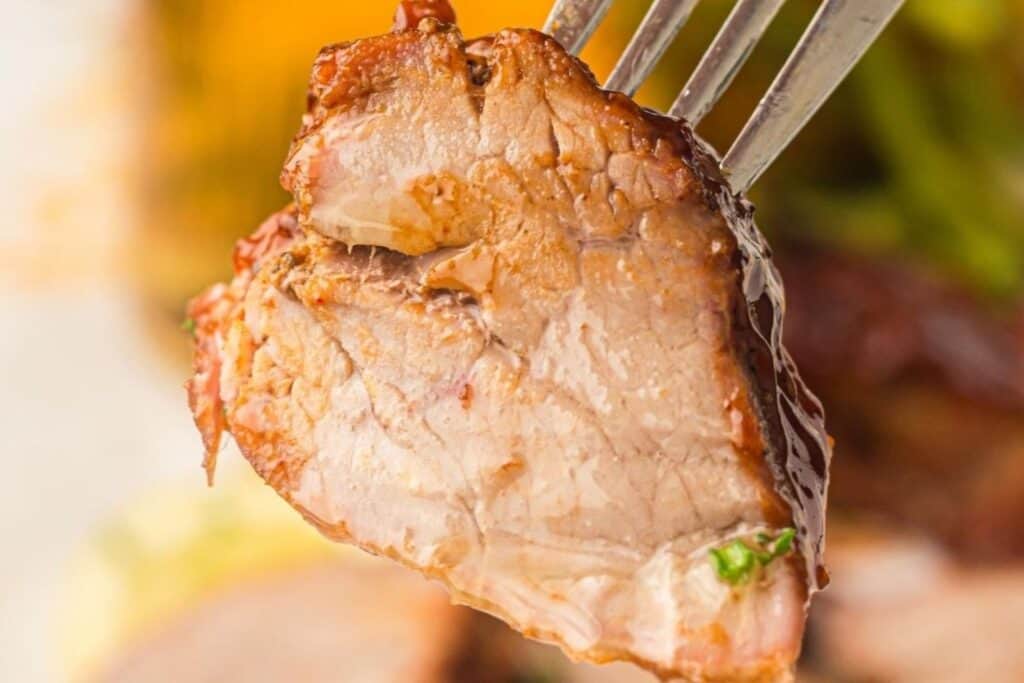
Grilled pork tenderloin is one of the fastest weeknight proteins; it’s ready in under 25 minutes, no babysitting. The catch: it’s also one of the easiest cuts to ruin. The fix is a two-zone fire, and pulling it at 140°F. Here’s how I get a juicy result every time.
This post may contain affiliate link(s). As an Amazon Associate, I earn from qualifying purchases. See Disclosure.
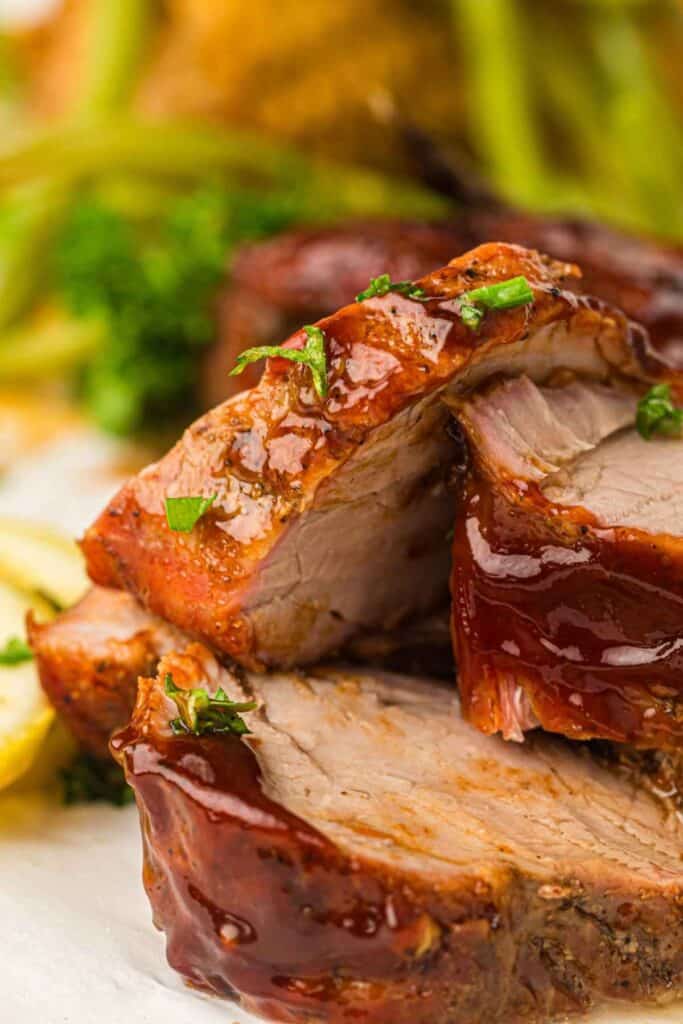
The two-zone setup is what saves this grilled pork tenderloin from becoming a dry, chalky disappointment. Sear it hard on the hot side for color and crust, then move it over to finish on indirect heat. That’s the whole method, and it works every time.

50+ Smoker Recipes eBook
This is a digital product. You'll receive an instant download link after purchase.
This full-color ebook cookbook features more than 50 of Chef Jenn’s tried, tested, and favorite smoker recipes! Enjoy:
- Smoked Beef Kabobs
- Smoked Chicken Thighs
- Smoked Bacon-Wrapped Pork Stuffed Jalapeno Poppers
- Smoked Spaghetti Squash with Herbs and so much more!

Chef Jenn’s Take on Grilled Pork Tenderloin
Most home cooks overcook pork tenderloin because they’re still working from the old USDA guideline of 160°F internal temp. That’s dry; in fact, that’s so overcooked it’s like eating leather. And, it’s what gave pork a bad reputation for twenty years. The USDA updated its recommendation to 145°F with a three-minute rest in 2011, but old habits die hard, and most people still grill it too long.
The step that locks this in is the two-zone setup: hot side for the sear, cool side for the finish. A tenderloin that goes directly over the flame for its entire cook gets charred outside and uneven inside. Two zones fix that. For more BBQ grill techniques, see my Grilled Steaks with Cowboy Butter with the same two-zone principle, different protein.
What You’ll Love About Grilled Pork Tenderloin
- The two-zone setup means you get actual grill crust without overcooked, chalky meat inside; something you flat-out cannot achieve cooking it over direct heat the whole way.
- This is a 25-minute cook from cold grill to sliced and rested, which makes it realistic for a weeknight when you don’t want to be outside for an hour.
- One rub, one optional glaze, one tenderloin: it feeds three or four people cleanly and produces zero leftovers you’ll feel bad about.
Equipment & Gear
- BBQ grill, gas or charcoal — Two-zone setup: one side on high heat, one side with no burner or no coals. A gas grill makes this easier to control; a charcoal kettle works just as well if you bank your coals to one side.
- Instant-read thermometer — Non-negotiable for pork tenderloin. This cut goes from perfect to overdone in under two minutes. A good digital meat thermometer is worth every penny.
- Long tongs — For turning the tenderloin during the sear and moving it to the cool side.
- Grill brush — Clean the grates before grilling. Pork tenderloin is lean and will stick to a dirty grate.
Ingredients
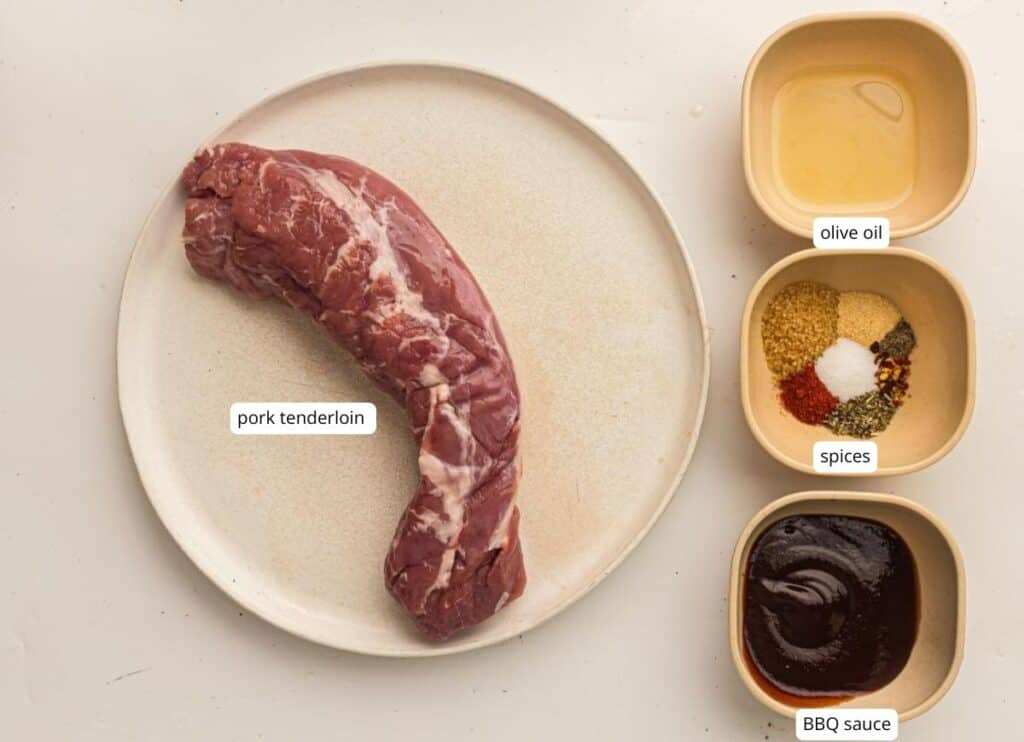
- Pork tenderloin — This is not pork loin. Tenderloin is a long, narrow, tapered muscle. Pork loin is thicker and cooks completely differently. If the package just says “pork loin,” put it back.
- Olive oil — Just enough to help the rub stick and encourage the sear. A neutral oil like avocado oil works too.
- Smoked paprika — Spanish smoked paprika, not regular sweet paprika. The smokiness is doing real work in the flavor profile here.
- Garlic powder — Powder, not granulated garlic. Granulated doesn’t adhere as evenly to the meat’s surface.
- Onion powder — Standard pantry onion powder. No substitutions needed.
- Brown sugar — Light or dark both work. This amount is enough to encourage caramelization during the sear without burning on a hot grill. Don’t increase it.
- Kosher salt — Diamond Crystal. If using Morton, cut to ¾ teaspoon; the crystals are denser, and Morton runs saltier.
- Black pepper — Freshly cracked if you have it. Pre-ground is fine.
- Dried thyme — Dried works here because the rub goes on before the sear. Fresh thyme burns fast over direct heat.
- Chili powder — Standard American-style chili powder blend, not pure cayenne. If you want a bit more spice, add some smoked hot paprika. About 1/8 teaspoon should do the trick.
- BBQ sauce for glaze — If you use it, brush it on in the last 2–3 minutes over indirect heat, not direct. Sugar in the sauce over direct flame burns fast.
How To Make Grilled Pork Tenderloin
Scroll down for the full recipe card with exact measurements and printable instructions.
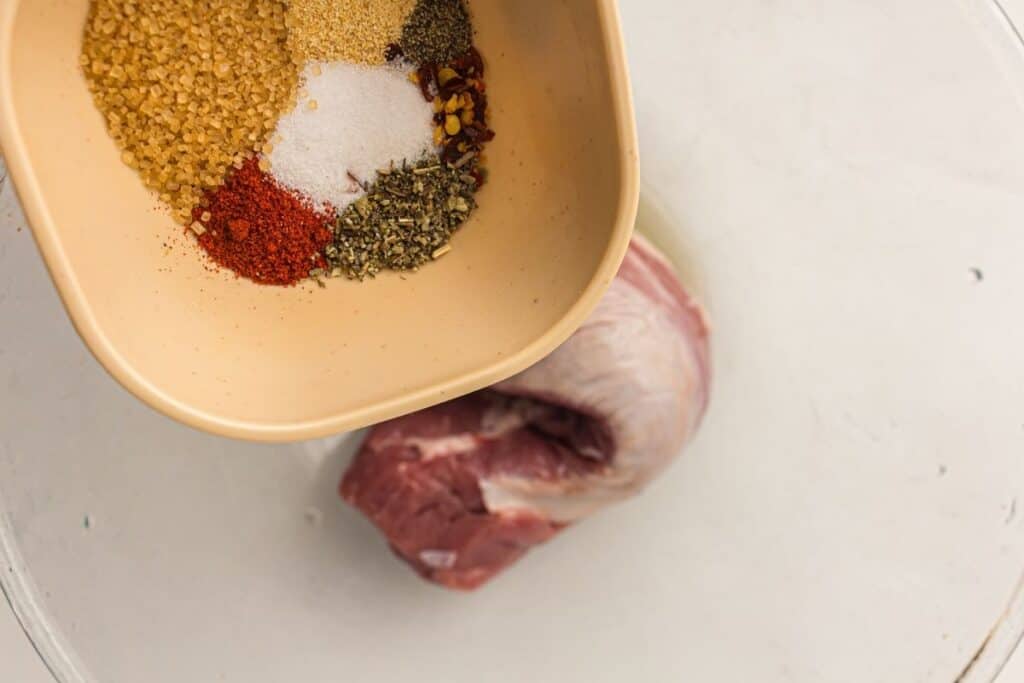
Pat the tenderloin completely dry with paper towels before anything else. A dry surface sears; a wet surface steams. Trim the silver skin from the tenderloin by working your knife under it and cutting it away from the tenderloin. Rub it all over with olive oil, then coat evenly with the seasoning blend. If you have time to let it sit at room temperature for 15–20 minutes after seasoning, the rub adheres better and the exterior dries out slightly, which helps the crust.
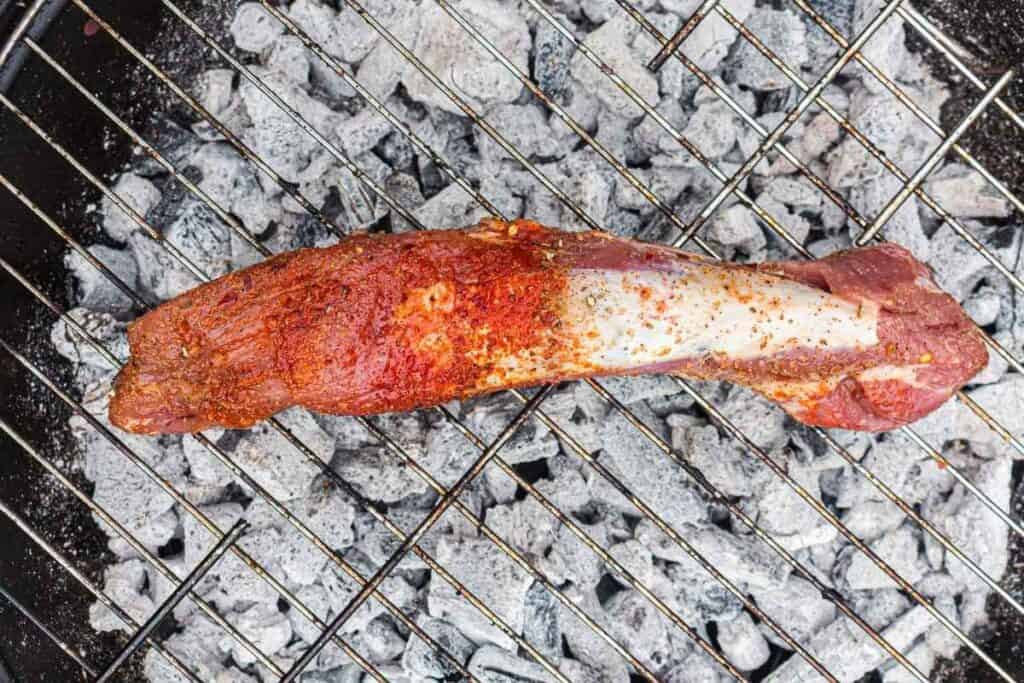
Set up a two-zone grill: one side on high heat, one side with no heat at all. On a gas grill, that means one or two burners on high, the other off. On a charcoal grill, bank your lit coals to one side. Preheat the hot side for at least 10 minutes before the tenderloin touches the grate. Clean and oil the grates right before you cook.
Place the tenderloin on the hot side and sear 2 minutes per side, rotating to hit all four sides. You’re looking for deep golden-brown color, not gray. That’s where the flavor is. Don’t move it around between turns — let the grill do the work.
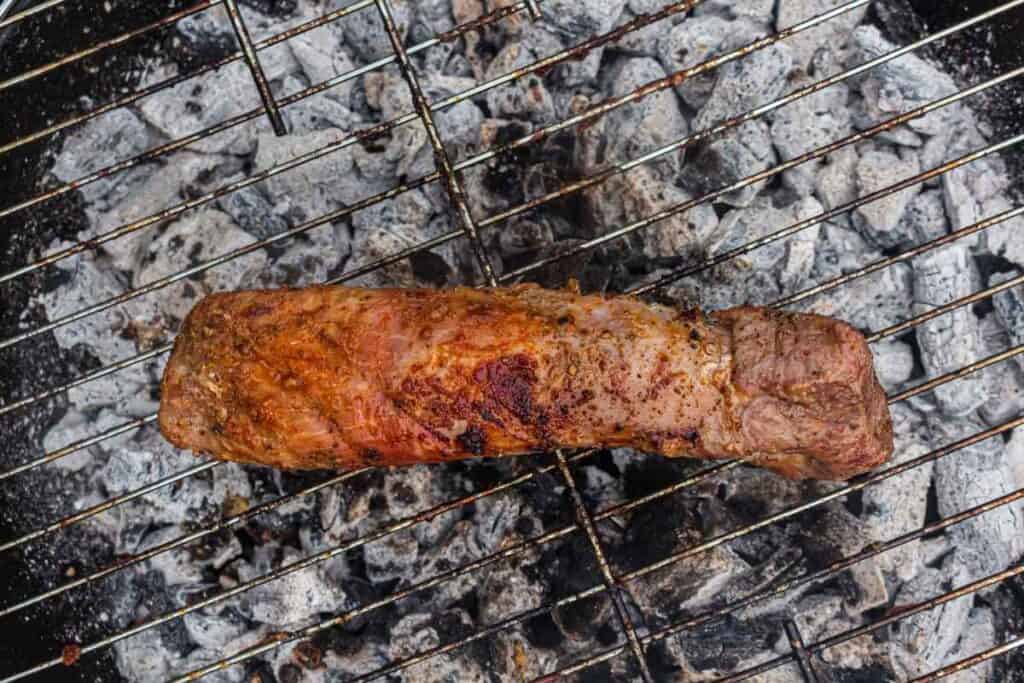
Once seared, move the tenderloin to the cool side of the grill and close the lid. Cook for 12–18 minutes, turning once halfway through. This is where your thermometer earns its keep. Start checking internal temp at the 10-minute mark. Pull the tenderloin when it hits 145°F internal at the thickest part, away from the tapered end (that section cooks faster and will read higher). If you want to apply a BBQ sauce glaze, brush it on during the last 2–3 minutes over the indirect side with the lid closed.
Rest the tenderloin for 5 full minutes before slicing. It’s a small cut, so the juices redistribute quickly. Slice into medallions about an inch thick and serve immediately.
Make It A Meal
I usually serve grilled pork tenderloin with something that can cook alongside it while the grill is already hot. My Grilled Elote Corn Ribs go on the cool side at the same time the tenderloin hits the hot side, and they’re ready right when the meat is resting. If you want a fuller spread, my Grilled Asparagus and Potato Salad can be made ahead and served at room temperature, which takes all the timing pressure off. Round it out with my Grilled Corn Guacamole as a starter while the grill preheats.
Storage
Store leftover sliced pork tenderloin in an airtight container in the fridge for up to 3 days. Reheat gently in a covered skillet over low heat with a splash of broth or water, or wrap in foil and warm in a 275°F oven for 10–12 minutes. Freezes well for up to 2 months; thaw overnight in the fridge before reheating.
Frequently Asked Questions
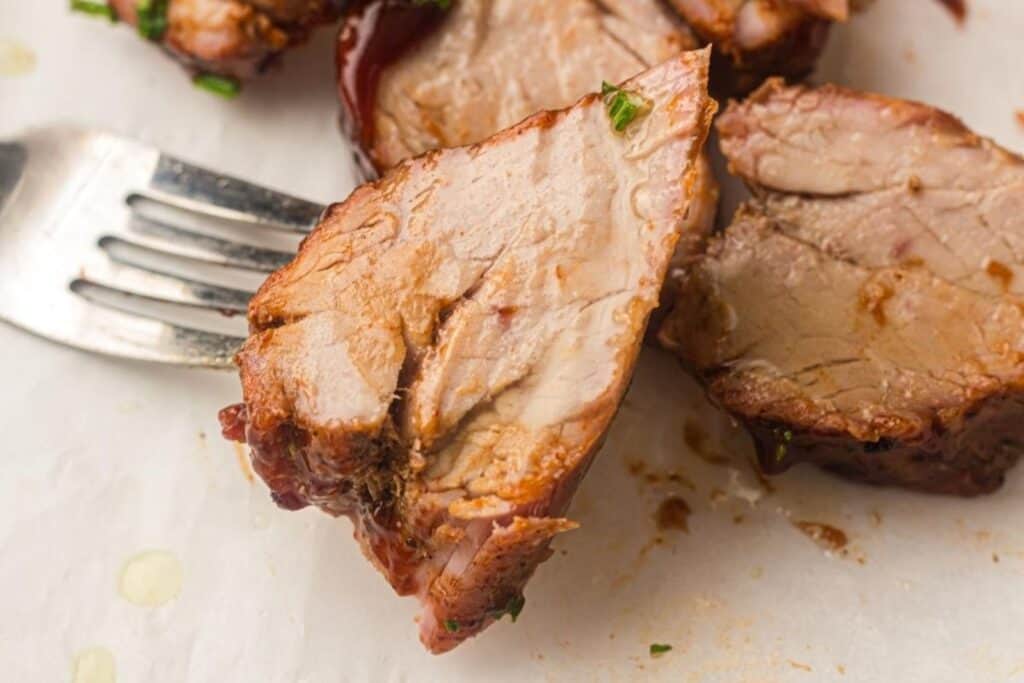
Pull it at 145°F internal, measured at the thickest part. After a 5-minute rest, carryover cooking will bring it up a few degrees. The interior will be pale pink at 145°F — that’s safe and correct per USDA guidelines updated in 2011. Pink pork is not undercooked pork.
Yes, with some adjustment. Sear the tenderloin on high for 2 minutes per side, then turn all burners to low, close the lid, and finish at reduced heat. You’ll have less control over the cook, but it works. Watch the internal temp closely and don’t walk away.
Yes. It works well on bone-in, skin-on chicken thighs, which can take the brown sugar without burning since they go on at medium-high heat rather than screaming high. Pull chicken thighs at 175°F internal, not 165°F — the higher temp breaks down the collagen and gives you better texture.
You don’t, really — at least not reliably. The firmness test (it should feel firm but springy) is better than nothing, but it’s not accurate enough for a cut this lean that goes dry so fast. A $20 instant-read thermometer is a better investment than ruining a $15 piece of pork.
Grilled Pork Tenderloin Recipe
Ingredients
- 450–550 grams pork tenderloin
- 1 tablespoon olive oil
- 1 teaspoon smoked paprika
- 1 teaspoon garlic powder
- 1 teaspoon onion powder
- ½ tablespoon brown sugar
- 1 teaspoon salt
- ½ teaspoon black pepper
- ½ teaspoon dried thyme
- ½ teaspoon chilli powder
- 1–2 tablespoons BBQ sauce optional glaze
Instructions
- Set up a two-zone grill: one side on high heat, one side off. Preheat for 10 minutes. Clean and oil the grates.
- Pat the pork tenderloin dry with paper towels. Rub all over with olive oil.
- Mix smoked paprika, garlic powder, onion powder, brown sugar, chili powder, salt, pepper, and thyme in a small bowl.
- Coat the tenderloin evenly in the seasoning blend.
- Place in the hot zone. Sear 2 minutes per side, rotating to hit all sides, for about 8 minutes total.
- Move to the cool zone. Close the lid and cook 12–18 minutes, turning once halfway, until the internal temperature reaches 145°F at the thickest part.
- Optional: Brush with BBQ sauce during the last 2–3 minutes on the cool side.
- Remove from the grill. Rest 5 minutes before slicing into medallions.
Video
Notes
Recipe Card Tips
- Don’t skip patting the tenderloin dry before oiling and seasoning. Moisture on the surface is the enemy of a good sear.
Start checking the internal temp at the 10-minute mark on the cool side, not at 18 minutes. The tapered end of a tenderloin cooks faster than the thick center; measure at the thickest point only. - If you’re glazing with BBQ sauce, apply it on the indirect side with the lid closed. Brush it over direct heat and the sugar burns before it caramelizes.
- On a cold or windy day, add 3–5 minutes to the indirect cook time. The grill has to work harder to hold temp outdoors when the ambient temperature drops.
Nutrition
A Note on Nutritional Information
Nutritional information for this recipe is provided as a courtesy and is calculated based on available online ingredient information. It is only an approximate value. The accuracy of the nutritional information for any recipe on this site cannot be guaranteed.